CVE-2026-41940: The Complete Guide to the cPanel & WHM Authentication Bypass, Attack Chain, Detection, and Remediation
CVE-2026-41940 is a critical authentication bypass vulnerability affecting cPanel & WHM environments.
Because cPanel often sits directly on internet-facing infrastructure, successful exploitation can expose hosting servers, customer accounts, administrative controls, and sensitive business data.
Security researchers and public advisories have linked this vulnerability to active exploitation campaigns, making rapid detection and remediation essential for hosting providers, enterprises, MSPs, and security teams managing exposed Linux infrastructure.
In this guide, we break down:
- How CVE-2026-41940 works
- Affected versions
- Attack chains and real-world exploitation
- Indicators of compromise (IOCs)
- Detection techniques
- Remediation steps
- Hardening recommendations
What Is CVE-2026-41940?
CVE-2026-41940 is an authentication bypass vulnerability in cPanel & WHM that allows unauthenticated remote attackers to gain unauthorized access to the control panel under specific conditions.
Authentication bypass vulnerabilities are especially dangerous because they undermine the trust boundary protecting administrative interfaces. Instead of stealing credentials directly, attackers manipulate flaws in the authentication process itself to gain access.
Because cPanel is widely used for web hosting administration, the impact of exploitation can extend far beyond a single system, potentially affecting hosted websites, databases, email accounts, DNS configurations, and customer environments.
Why Authentication Bypass Vulnerabilities Are Dangerous
Authentication bypass vulnerabilities are among the highest-risk security issues because they can provide immediate administrative access without requiring valid credentials.
Unlike brute-force attacks or credential theft campaigns, authentication bypass exploits target weaknesses in session validation, trust mechanisms, request handling, or application logic.
When these flaws affect internet-facing infrastructure such as cPanel & WHM, attackers can quickly:
- Gain administrative control
- Establish persistence
- Deploy backdoors
- Steal credentials
- Pivot into internal systems
- Launch ransomware or malware campaigns
Why cPanel & WHM Is a High-Value Target
cPanel & WHM is one of the most widely deployed hosting administration platforms globally. It is commonly used by:
- Hosting providers
- MSPs
- Enterprises
- Cloud infrastructure operators
- Web application teams
Because these systems often manage:
- Multiple hosted websites
- Privileged accounts
- DNS infrastructure
- Email systems
- Databases
- SSL certificates
They represent highly attractive targets for attackers seeking scale and persistence.
Affected Versions and Products
According to the vendor advisory, CVE-2026-41940 affects multiple supported cPanel & WHM release tiers, as well as WP Squared deployments. Organizations should immediately inventory exposed systems and identify whether affected builds remain accessible from the internet.
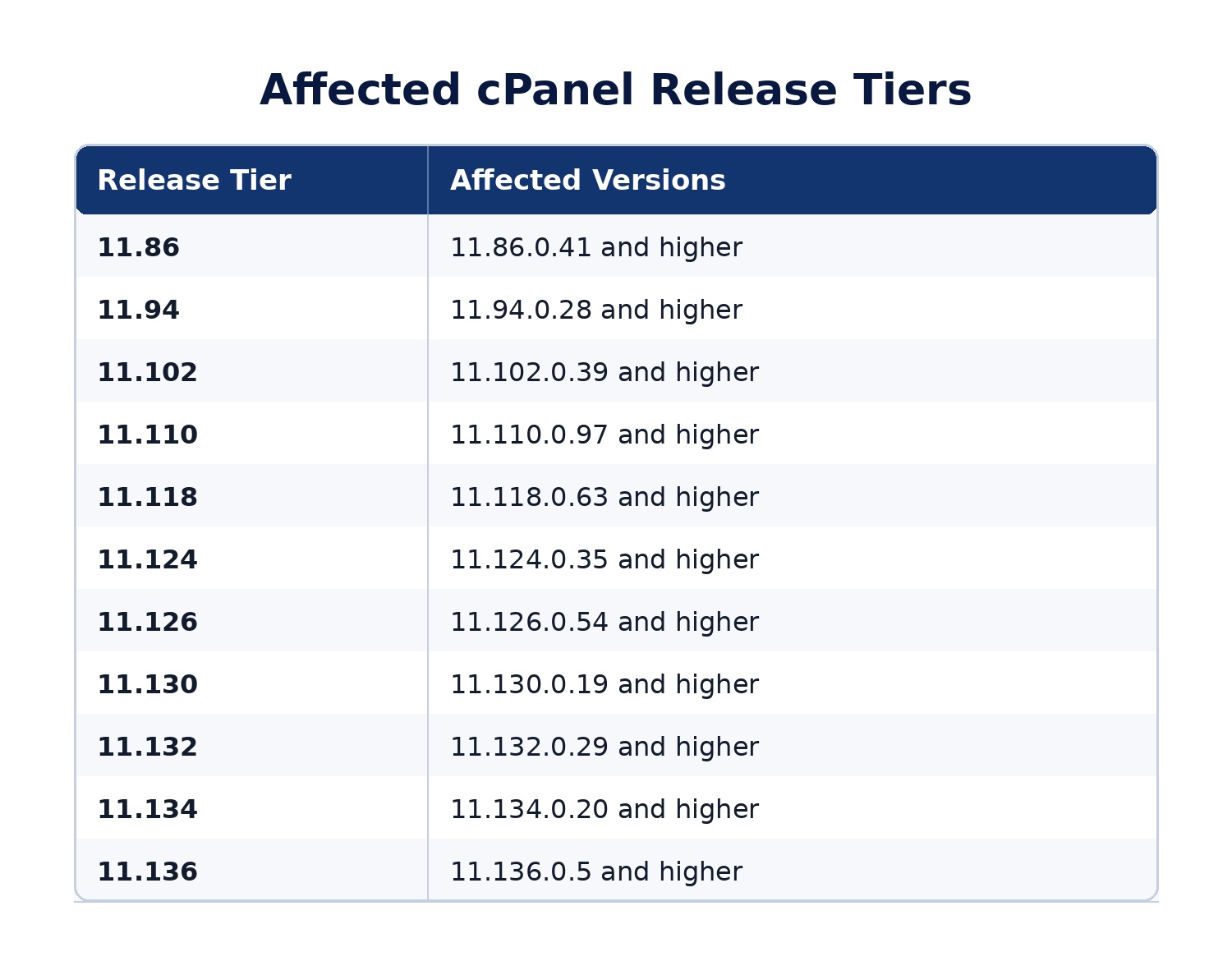
How to Check Your cPanel Version
Administrators can verify their current cPanel version directly from the command line or administrative interface.
Version validation is critical because many environments run delayed update tiers or customized hosting builds that may remain exposed longer than expected.
How CVE-2026-41940 Works
At a high level, CVE-2026-41940 abuses weaknesses in the authentication flow used by cPanel & WHM.Public reporting suggests attackers manipulate request handling and session behavior to bypass normal authentication controls and gain unauthorized administrative access.
Once authentication trust is broken, attackers can interact with the control panel as though they were legitimate users.
Understanding the authentication flow
Modern administrative applications rely on:
- Session validation
- Token integrity
- Request parsing
- Trust boundaries
- Privilege checks
When flaws emerge in any of these areas, attackers may be able to:
- Forge trust relationships
- Manipulate headers or requests
- Bypass validation logic
- Hijack authenticated workflows
Authentication bypass flaws are especially dangerous because exploitation often requires no valid credentials.
What Attackers Gain After Exploitation
Successful exploitation may allow attackers to:
- Access administrative interfaces
- Modify hosting configurations
- Create privileged accounts
- Access hosted customer environments
- Manipulate DNS records
- Deploy webshells or backdoors
- Exfiltrate credentials
- Establish persistence
Because cPanel environments frequently host multiple websites and customer workloads, compromise can rapidly expand into broader infrastructure exposure.
Attack Chain and Real-World Exploitation
CVE-2026-41940 has moved beyond theoretical risk. Public reporting and threat intelligence updates indicate attackers have actively exploited vulnerability in real-world campaigns. This makes vulnerability particularly dangerous for internet-facing hosting infrastructure.
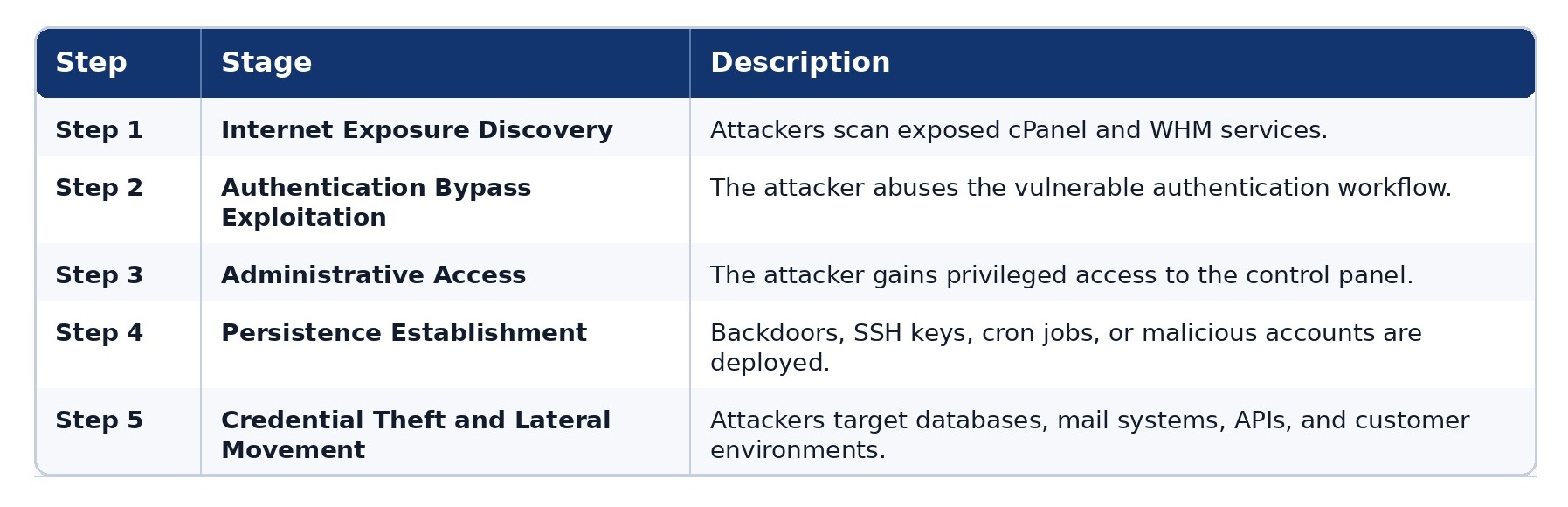
Know more about attacks on CVE-2026-41940
Why Internet-Facing Systems Are Being Targeted
Attackers increasingly prioritize internet-facing infrastructure because:
- Exposure simplifies initial access
- Exploitation scales efficiently
- Edge systems often lack visibility
- Patch delays are common
- Compromised hosting infrastructure provides broad downstream access
This trend is also visible across:
- PAN-OS vulnerabilities
- Fortinet vulnerabilities
- Ivanti exploitation campaigns
- VPN gateway attacks
- Edge-device compromises
Indicators of Compromise (IOCs)
Organizations should immediately investigate suspicious activity on exposed cPanel & WHM systems, especially if patching was delayed or internet exposure remained unrestricted.
Authentication Anomalies
- Unexpected administrative sessions
- Failed or unusual login sequences
- Suspicious IP addresses
System Modifications
- Unauthorized account creation
- Modified configuration files
- Unexpected cron jobs
- Suspicious startup scripts
Persistence Indicators
- Unknown SSH keys
- Webshells
- Malicious plugins
- Hidden admin users
- Network Activity
- Outbound connections to unknown infrastructure
- Unusual DNS traffic
- Encrypted outbound tunnels
CVE-2026-41940 - Remediation and Mitigation
Organizations should prioritize remediation immediately because active exploitation significantly increases breach risk. Vendor guidance recommends updating affected systems to patched builds as quickly as possible.
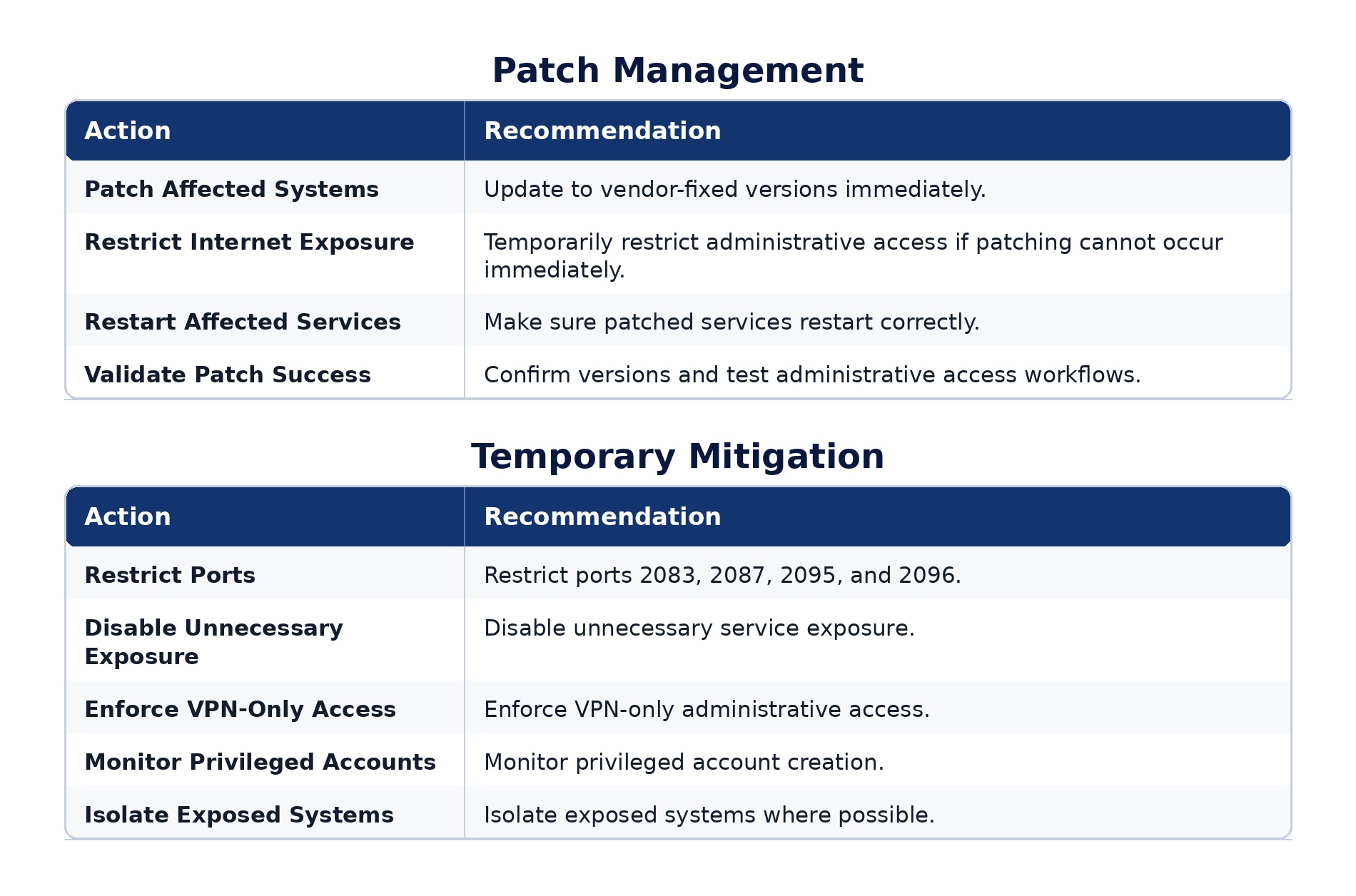
Incident Response Checklist
If compromise is suspected, organizations should treat affected systems as potentially hostile and begin incident response procedures immediately.
Containment
- Isolate affected servers
- Disable exposed interfaces
- Preserve forensic evidence
Eradication
- Remove persistence mechanisms
- Rotate credentials
- Revoke SSH keys
- Remove unauthorized accounts
Recovery
- Rebuild compromised systems
- Restore trusted backups
- Validate integrity before reconnecting systems
Hardening Recommendations
Long-term protection requires reducing exposure, improving visibility, and continuously monitoring internet-facing infrastructure.
- Minimize internet-facing admin exposure
- Enforce MFA
- Segment hosting infrastructure
- Continuously monitor vulnerabilities
- Automate patch validation
- Restrict privileged access
- Audit administrative activity
- Monitor for emerging KEV vulnerabilities